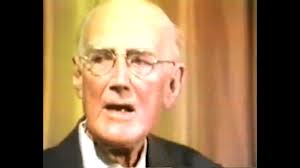
Sir Geoffrey Vickers was a unique figure in the history of systems thinking. Unlike many early systems pioneers who were scientists or mathematicians, Vickers was a decorated soldier, a lawyer, and a manager. His insights did not come from a lab. They came from decades of practical, high-stakes experience in government and industry.
Vickers became one of the most important thinkers in the field by focusing on human systems and decision-making. His work moved systems theory away from being strictly mechanical. He argued that the most important systems are those built on human relationships, values, and judgments. His greatest contribution, the concept of the appreciative system, explains how people and organizations make sense of the world.
Practitioner Turned Thinker
Vickers’s extraordinary career gave him a deep understanding of human governance and organizational complexity. He was born in 1894 and served as an officer during World War I, where he was awarded the Victoria Cross (VC) for bravery. After the war, he worked as a partner in a major London law firm.
His most intense management experience came after World War II. He served for ten years as a board member at the National Coal Board (NCB). At the time, the NCB was one of the largest employers in the United Kingdom. He was in charge of manpower, training, and welfare. This challenging, real-world work with massive human systems informed all his later writing in retirement.
The Concept of the Appreciative System
Vickers’s most significant contribution to systems thinking is the concept of the appreciative system. He developed this idea to describe the ongoing human process of making sense of the world, which is much more complex than simple, rational decision-making.
Appreciation: Judging Facts and Values
Vickers argued that our view of the world is not simply based on “facts.” Instead, it is based on appreciation. He defined appreciation as a “combined judgement of value and fact“.
A fact is only relevant if it matters to a judgment of value. For example, the fact that a bank account has low funds only matters if you value financial security. Your personal values and standards always filter what facts you choose to notice. These judgments of value and fact are mixed together and cannot be separated.
The Appreciative System Model
An appreciative system is essentially a “set of readinesses” to notice some things in a situation instead of others. It is like a lens that organizes and classifies information based on how you already value things.
The process works in a constant loop:
- Flux of Events: The world is an unending flow of events and ideas.
- Appreciation: We filter this flow, perceiving reality and making judgments about it, based on our internal standards.
- Action: This judgment leads to an action (or inaction).
- Standards Change: The results of the action feed back into the system, which can slightly modify our standards and values.
This process shows that we are always learning and changing our view of the world based on our actions and experiences.
Regulation and the Power of Relationships
Vickers made other important contributions by focusing on the core purpose of human systems.
The Centrality of Relationships
Vickers strongly believed that the heart of human activity, especially in organizations, is not about seeking a specific, fixed goal. Instead, it is about maintaining human relationships. The job of a manager or leader is to manage and maintain the web of relationships and the stability of society itself.
He believed that individuals must take personal responsibility for these relationships. This view challenges the common idea of a totally self-governing individual.
Form and Regulation
Vickers defined an open system (like a river, an animal, or an organization) by its form, not by the physical things that make it up. The form is more lasting than the substances that flow through it.
The question for any open system is how it keeps its organized form through constant change. Vickers called this question regulation. His work focused on how organizations regulate themselves by constantly managing relationships and correcting deviations from their expected form.
Human contacts are dangerous [because] they matter so much, and no one knows how much they matter. … Intimate contacts make heaven and hell, they can heal and tear, kill and raise from the dead. These contacts are the fields in which we succeed or fail.
Conclusion
Sir Geoffrey Vickers provided a crucial link between the technical side of systems theory and the reality of human experience. His concept of the appreciative system gave thinkers a model for how values and facts combine to shape our perception and decision-making. By emphasizing the essential role of relationships and regulation in maintaining human systems, he laid critical groundwork for the later development of Soft Systems Methodology. Vickers showed that to understand any human system, we must first understand how the people inside it choose to look at the world.