
Have you ever tried to fix a problem, only to realize you made ten more problems in the process? This happens because we often look at things in pieces. We fix one part of a machine or one rule in a company without looking at how it affects everything else. C. West Churchman spent his life teaching a better way. He called it the Systems Approach.
C. West Churchman was a philosopher who believed that thinking clearly could save the world. He didn’t just want to make businesses faster or cheaper. He wanted to use the human mind to end poverty and war. To do that, he realized we have to stop looking at small parts and start looking at the “whole system”.
Who was C. West Churchman?
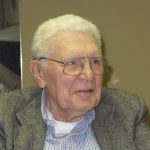
Charles West Churchman was born in 1913 in Philadelphia. He grew up attending a Quaker school where he learned that the best thing you can do is dedicate your life to helping people. At 17 years old, he wrote in his journal that his life’s work would be to better humanity.
He started his career in philosophy, but World War II changed his path. During the war, he worked at an arms factory where he used math and logic to improve production. This experience taught him that philosophy should be used to solve real-world problems like war and security. Later, he became a famous professor at the University of California, Berkeley, where he taught for over 50 years.
The Core of the Systems Approach
The Systems Approach is a way of looking at a problem by considering every part that touches it. Churchman believed that if you only look at one piece of a puzzle, you will never see the full picture.
Defining Boundaries
One of the most important parts of Churchman’s work was the idea of boundaries. A boundary is a line we draw to decide what is “inside” the system and what is “outside”. For example, if an architect is designing a house:
- A narrow boundary includes only the walls and roof.
- A systems boundary includes the family living there, their activities, and even the whole city.
Churchman taught that we must always ask: “What is the largest system we need to consider?”.
“Sweeping In” Values
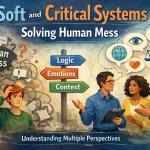
Churchman believed that a system isn’t just made of objects; it is also made of people and their values. He used a term called “sweeping in”. This means that when you are solving a problem, you should try to include as many different perspectives and values as possible. If you ignore how people feel or what they believe, your solution will likely fail.
Why Solutions are Often “Wrong”
In his famous 1968 book, The Systems Approach, Churchman made a surprising statement. He said that most solutions to systems problems are “wrong” or even “dangerously wrong”.
Why would he say that? He believed that because we can never see the “whole system,” every solution we create is incomplete. We always leave something out. However, he also argued that the systems approach is still a “good idea” because it forces us to be ethical and keep looking for a bigger picture.
West Churchman has devoted his life and his philosophy to securing improvements in the human condition by means of the human intellect. His is a calling that demands from us the most in compassion and consciousness.” — Robert Mason, Former Student
The Four Enemies of Systems Thinking
Churchman realized that scientists and planners often try to be purely logical. But the real world isn’t always logical. He identified four things he called the “enemies” of the systems approach:
- Politics: How power is shared.
- Morality: What people feel is right or wrong.
- Religion: Deeply held beliefs.
- Aesthetics: Beauty and the way things feel.
He called them “enemies” because planners often ignore them. Churchman argued that we must “be our own enemy” by listening to these perspectives instead of ignoring them.+2
A Legacy of “Moral Outrage”
Churchman was driven by what he called “moral outrage”. He was angry that humans were smart enough to go to the moon but still allowed people to suffer from hunger and poverty. He worked with big organizations like NASA to help them think more humanely.+2
Even into his 80s, Churchman continued to write about “global ethical management”. He wanted every manager and leader to lead with their heart as well as their head.
Conclusion
C. West Churchman was a giant in the field of systems thinking. He showed us that logic and math are not enough to fix a “mess”. To truly improve the world, we must use our compassion. By “sweeping in” ethics and different points of view, we can create systems that aren’t just efficient, but also fair. His work remains a powerful reminder that our intellect should always serve humanity.