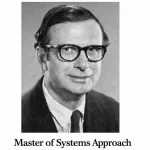
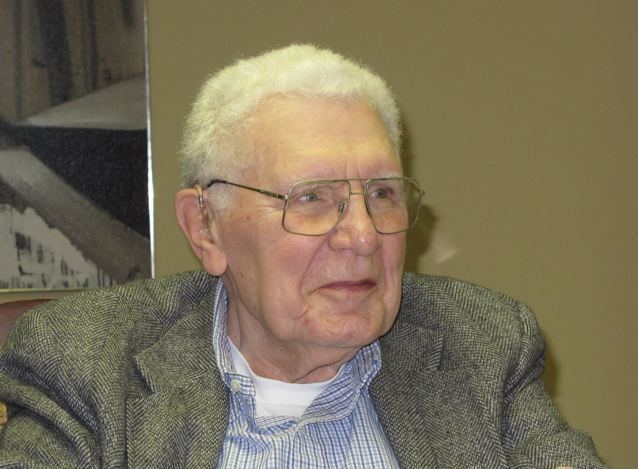
Many leaders try to fix their companies by looking at the pieces. They think that if they make the marketing department perfect and the accounting department perfect, the whole company will be perfect. Russell Ackoff spent his career proving that this is actually impossible. In fact, he argued that if you make every part of a system perform as well as it can, the system as a whole will often fail.
Russell Ackoff (1919–2009) was a pioneer of systems thinking. He was an architect, a philosopher, and a professor at the Wharton School. He believed that management is not about managing people or things, but about managing the interactions between them.
The Shift from the Machine Age to the Systems Age
To understand Ackoff, you must understand how he viewed history. He believed humanity was moving from one “age” to another.
The Machine Age
In the Machine Age, we viewed the world like a giant clock. We believed that if we took a machine apart and understood every gear, we would understand the whole thing. This led to “Analysis.” Analysis is the process of breaking things down into smaller and smaller pieces. In management, this led to people being treated like replaceable parts in a factory.
The Systems Age
Ackoff argued we are now in the Systems Age. In this age, we realize that the world is made of living systems, not dead machines. A system is a whole that cannot be divided into independent parts. If you take a heart out of a human body, the heart cannot pump blood, and the body cannot live. The “System” only works when the parts work together.+2
Managing the “Mess”: Why Problems Are Not Solitary
Ackoff famously said that managers do not solve simple problems. They deal with “messes.” A mess is a system of problems that are all tangled together.
Imagine a company with low sales.
- The sales team says the product is bad.
- The product team says they don’t have enough budget.
- The budget team says sales are too low to give more money.
This is a mess. You cannot solve the “sales problem” without solving the “budget problem” and the “product problem” at the same time. If you try to solve them one by one, the mess just shifts around. Ackoff taught that you must manage the entire mess as one single unit.
The Three Steps of Synthesis
Ackoff believed that the old way of thinking (Analysis) was great for machines but terrible for organizations. He promoted Synthesis instead. He broke synthesis down into three clear steps:
- Identify the Containing Whole: Look at the bigger system that your problem sits inside. If you are looking at a department, the “whole” is the company.
- Explain the Behavior of the Whole: Understand what the bigger system is trying to achieve. What is the company’s goal?
- Explain the Behavior of the Part: Now, look at your specific department and see how it helps (or hurts) the bigger system.
By following these steps, you stop trying to make the department look good and start trying to make the company work better.
Interactive Planning and Idealized Design
Most companies plan by looking at last year’s numbers and adding 5%. Ackoff thought this was lazy. He created a process called Interactive Planning, which starts with something called Idealized Design.
The “Clean Sheet” Rule
In an Idealized Design session, Ackoff would tell a group: “Imagine your company was destroyed last night. You have a clean sheet of paper. If you could build the perfect company today, with the technology that exists right now, what would it look like?”
The Two Constraints
There are only two rules for this perfect design:
- Technological Feasibility: You cannot use magic. It must be possible with current science.
- Operational Viability: The company must be able to survive in the real world.
By designing the “ideal” version of the company, leaders stop focusing on what is wrong today and start focusing on what is right for tomorrow. Once the ideal is designed, you work backward to the present day to see what changes need to be made.
Wisdom vs. Information (The DIKW Hierarchy)
Ackoff was very concerned that we are drowning in data but starving for wisdom. He created a hierarchy to show how the human mind should work:
- Data: These are raw facts. (e.g., “It is raining.”)
- Information: Data that is useful. (e.g., “It has rained 4 inches today.”)
- Knowledge: Knowing “how” to do something. (e.g., “Knowing how to build a dam to stop the rain.”)
- Understanding: Knowing “why” things happen. (e.g., “Understanding the weather patterns that cause the rain.”)
- Wisdom: This is the highest level. It is knowing if we should build the dam at all. Wisdom is about values and ethics.
“The more efficient you are at doing the wrong thing, the wronger you become. It is much better to do the right thing wrong than the wrong thing right.” — Russell Ackoff
The Two Types of Mistakes
Ackoff believed that the way we treat mistakes stops companies from growing. He identified two types:
- Errors of Commission: This is when you do something you should not have done (e.g., a bad investment).
- Errors of Omission: This is when you fail to do something you should have done (e.g., missing a big new opportunity).
In most companies, you only get in trouble for the first kind. This makes managers play it safe and never try anything new. Ackoff argued that “Errors of Omission” are much more expensive and can kill a company, yet they are rarely recorded in accounting books.
Conclusion
Russell Ackoff was more than a management teacher; he was a thinker who wanted us to see the beauty of the whole. He showed us that a system is not just a collection of parts, but a living network of relationships. By focusing on synthesis, wisdom, and the “idealized” future, we can stop simply reacting to problems and start designing the world we actually want to live in.