Have you ever tried to solve a problem at work or school, but realized that everyone involved had a different idea of what the “problem” actually was? Engineering and math can fix a broken engine, but they often struggle to fix a “broken” team or a confusing government policy. This is where Peter Checkland comes in.
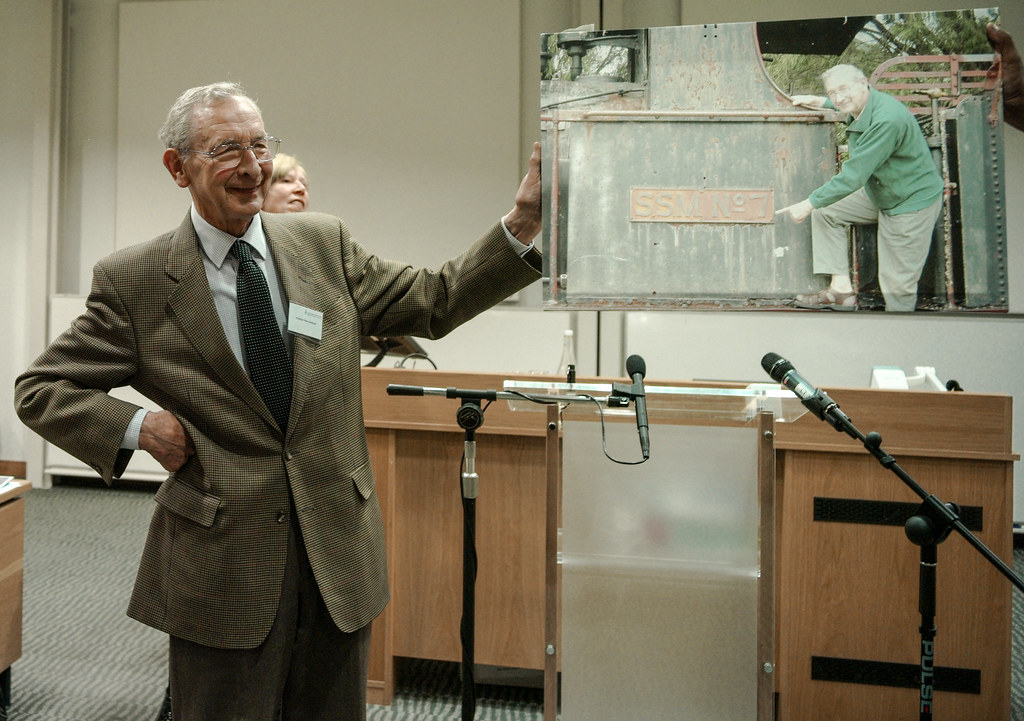
Peter Checkland (1930–2020) was a British management scientist who changed how we look at human organizations. He realized that people aren’t like machines. We have different goals, different feelings, and different ways of seeing the world. To help us navigate this, he created Soft Systems Methodology (SSM).
Hard Systems vs. Soft Systems
Before Checkland, most “systems thinkers” focused on what he called Hard Systems.
- Hard Systems: These have a clear goal. If you want to build a bridge, the goal is to get from point A to point B. You use math and physics to find the best way.
- Soft Systems: These are messy. In a soft system, like a hospital or a business, people might not agree on the goal. One person wants to save money; another wants to save time; another wants to provide the best care.
Checkland argued that in the real world, most of our problems are “soft.” We don’t need a better calculator; we need a better way to talk to each other and agree on a plan.
The Power of the “Rich Picture”
One of Checkland’s most famous tools is the Rich Picture. Instead of writing a long, boring report about a problem, he suggested drawing it.
A Rich Picture is a big, messy drawing that shows everything related to a situation. It includes:
- The people involved.
- The items or technology they use.
- Their feelings (like worries or conflicts).
- The “climate” of the organization.
By drawing a picture, you can see the whole story at once. It helps groups of people point to the drawing and say, “Yes, that’s exactly how I feel,” or “Wait, you forgot about this part!” It is the ultimate tool for starting a better conversation.
CATWOE: The Six-Point Checklist
When you are trying to understand a system, Checkland suggested using a checklist called CATWOE. This helps you define what the system is actually doing and who it is for.
| Letter | Meaning | Question to Ask |
| C | Customers | Who benefits from (or is hurt by) this system? |
| A | Actors | Who does the actual work to make the system run? |
| T | Transformation | What is the main thing the system changes? (Input to Output) |
| W | Worldview | What is the big idea that makes this system meaningful? |
| O | Owners | Who has the power to stop or start the system? |
| E | Environment | What outside rules or limits must the system follow? |
Using CATWOE ensures that you don’t forget the human side of the problem.
The 7 Steps of Soft Systems Methodology (SSM)
Checkland developed a 7-step process to help groups move from a mess to a solution. It is designed to be a loop, meaning you can keep doing it as the situation changes.
- The Unstructured Situation: You realize there is a problem, but it’s messy and unclear.
- The Expressed Situation: You create a Rich Picture to show the mess.
- Root Definitions: You use CATWOE to write a clear sentence about what the system should be.
- Conceptual Models: You draw a map of the activities needed to reach that goal.
- Comparison: You compare your “ideal” map (Step 4) with the “real world” (Step 2).
- Debate Changes: The group discusses what changes are both “desirable” and “feasible.”
- Action: You take action to improve the situation.
Why “Learning” is Better Than “Fixing”
Checkland didn’t believe in “optimal” solutions. He knew that in a world full of people, things are always changing. Instead of trying to “fix” a system once and for all, he believed in Learning Systems.
He taught that we should always be observing, drawing, talking, and adjusting. For Checkland, the goal of systems thinking isn’t to reach a perfect destination; it’s to become better at the journey.
“Systems thinking is not a process for finding ‘the’ solution. It is a process for learning our way through a complex situation.” — Peter Checkland
Conclusion
Peter Checkland took systems thinking out of the lab and into the real world. He showed us that while numbers are important, human perspectives are the key to solving our biggest “messes.” By using tools like Rich Pictures and CATWOE, we can stop arguing and start understanding. His work reminds us that in any complex system, the most important part is the people.